
API reference
THIAMINE HCl
- CAS number
- 67-03-8
- Molecular formula
- C12H18Cl2N4OS
- Molecular weight
- 337.3 g/mol
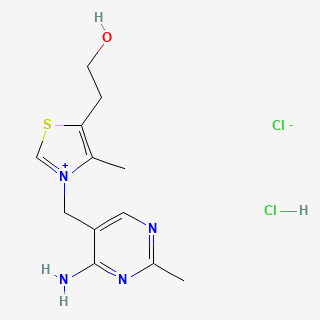
About this molecule
Thiamine or thiamin, also known as vitamin B1, is a colorless compound with the chemical formula C12H17N4OS. It is soluble in water and insoluble in alcohol. Thiamine decomposes if heated. Thiamine was first discovered by Umetaro Suzuki in Japan when researching how rice bran cured patients of Beriberi. Thiamine plays a key role in intracellular glucose metabolism and it is thought that thiamine inhibits the effect of glucose and insulin on arterial smooth muscle cell proliferation. Thiamine plays an important role in helping the body convert carbohydrates and fat into energy. It is essential for normal growth and development and helps to maintain proper functioning of the heart and the nervous and digestive systems. Thiamine cannot be stored in the body; however, once absorbed, the vitamin is concentrated in muscle tissue.
Source: Toxin and Toxin Target Database (T3DB), via PubChem.
Identifiers
- IUPAC name
- 2-[3-[(4-amino-2-methylpyrimidin-5-yl)methyl]-4-methyl-1,3-thiazol-3-ium-5-yl]ethanol;chloride;hydrochloride
- InChIKey
- DPJRMOMPQZCRJU-UHFFFAOYSA-M
- SMILES
- CC1=C(SC=[N+]1CC2=CN=C(N=C2N)C)CCO.Cl.[Cl-]
- PubChem CID
- 6202
Also known as
THIAMINE HYDROCHLORIDE · Thiamine HCL · Aneurine hydrochloride · Vitamin B1 hydrochloride · Clotiamina · Eskaphen · Thiamine chloride hydrochloride · Betalin S
Chemical data on this page is drawn from PubChem (National Library of Medicine) and is provided for identification only. Hanpars does not hold stock of every substance listed; availability, grade, documentation and regulatory status are confirmed per enquiry.
Tell us the grade, the quantity and the market.
Send the molecule or ingredient, the specification and the destination. We reply from Tehran with the questions, the documents and the next step.